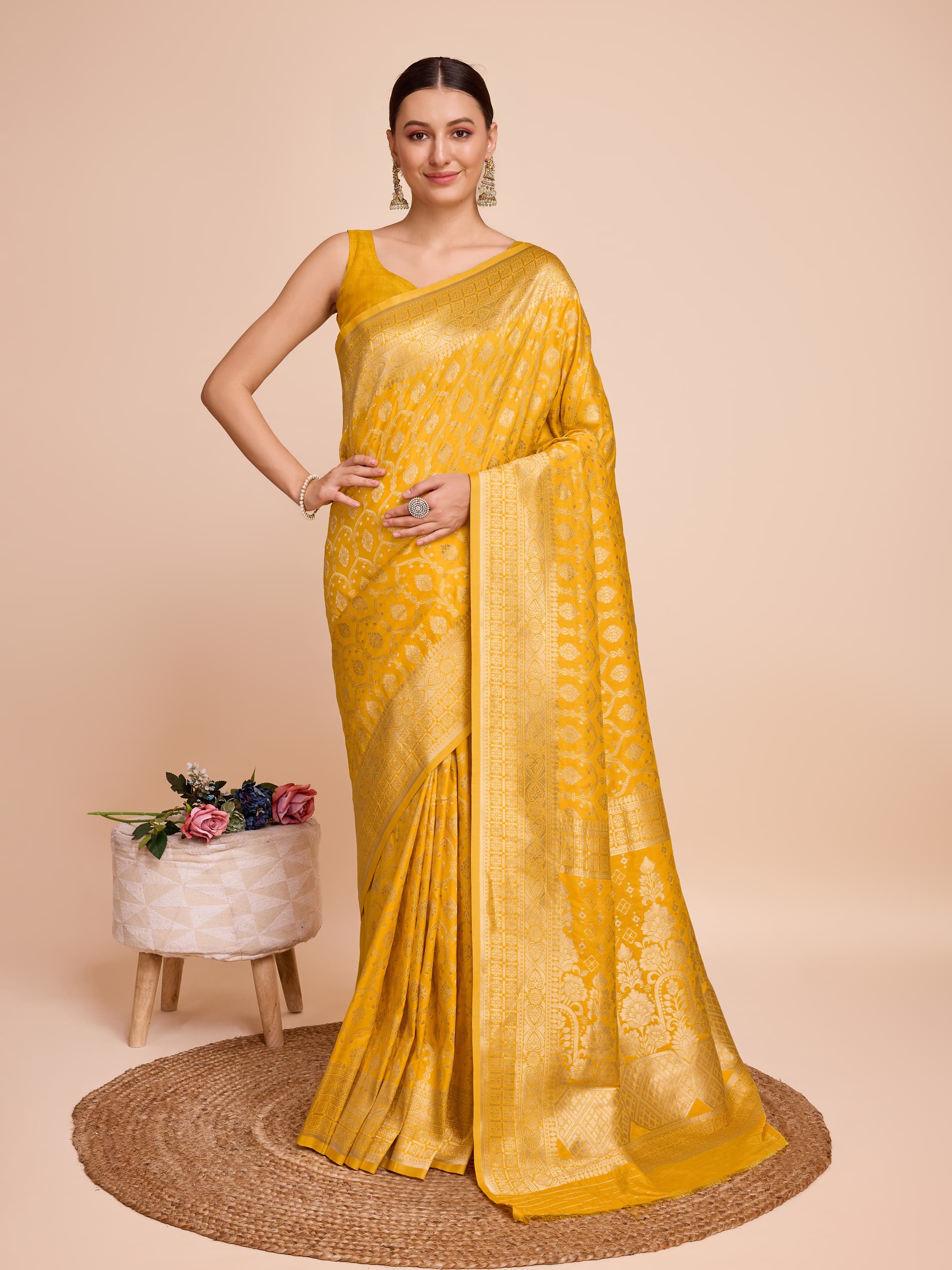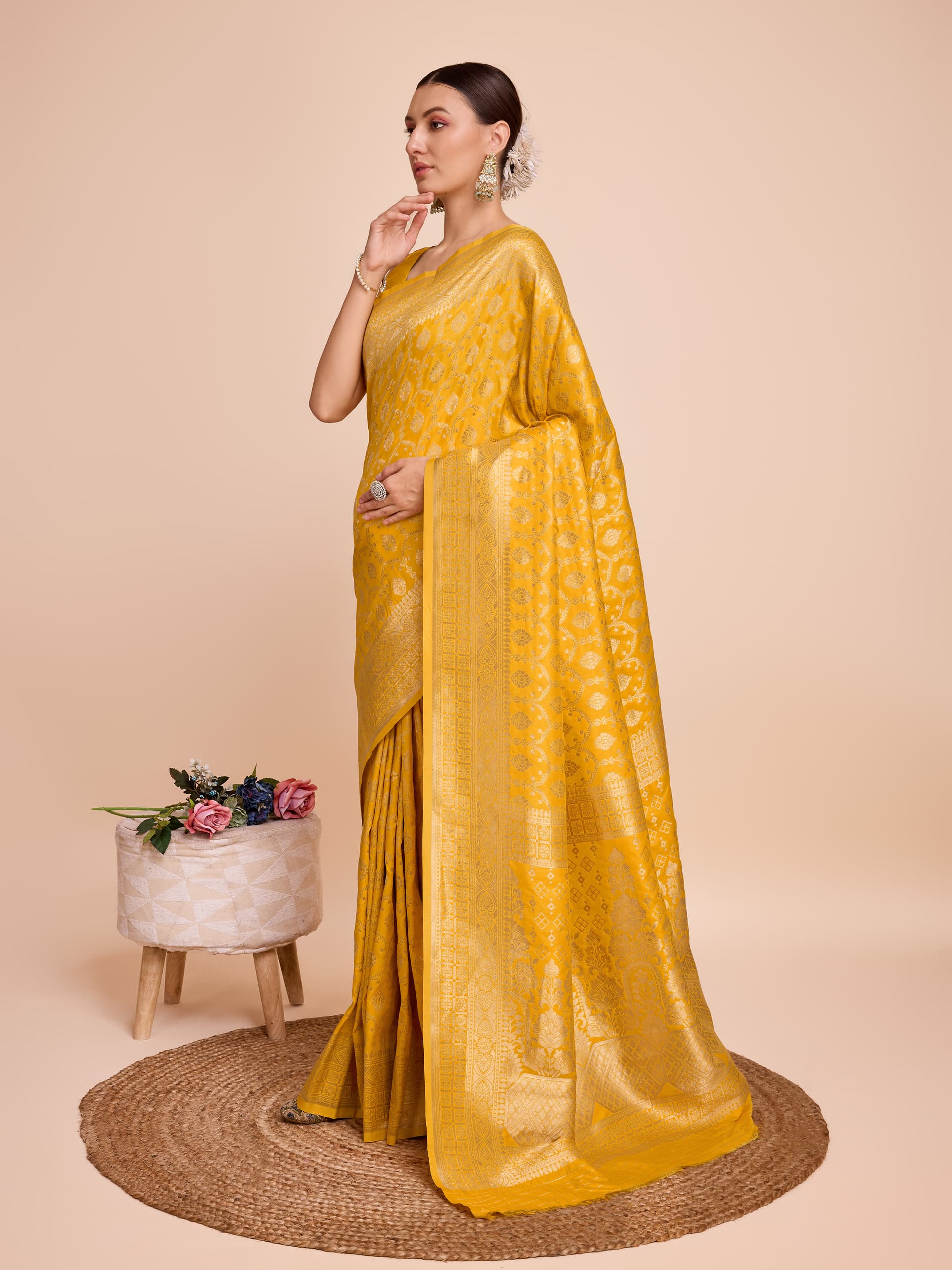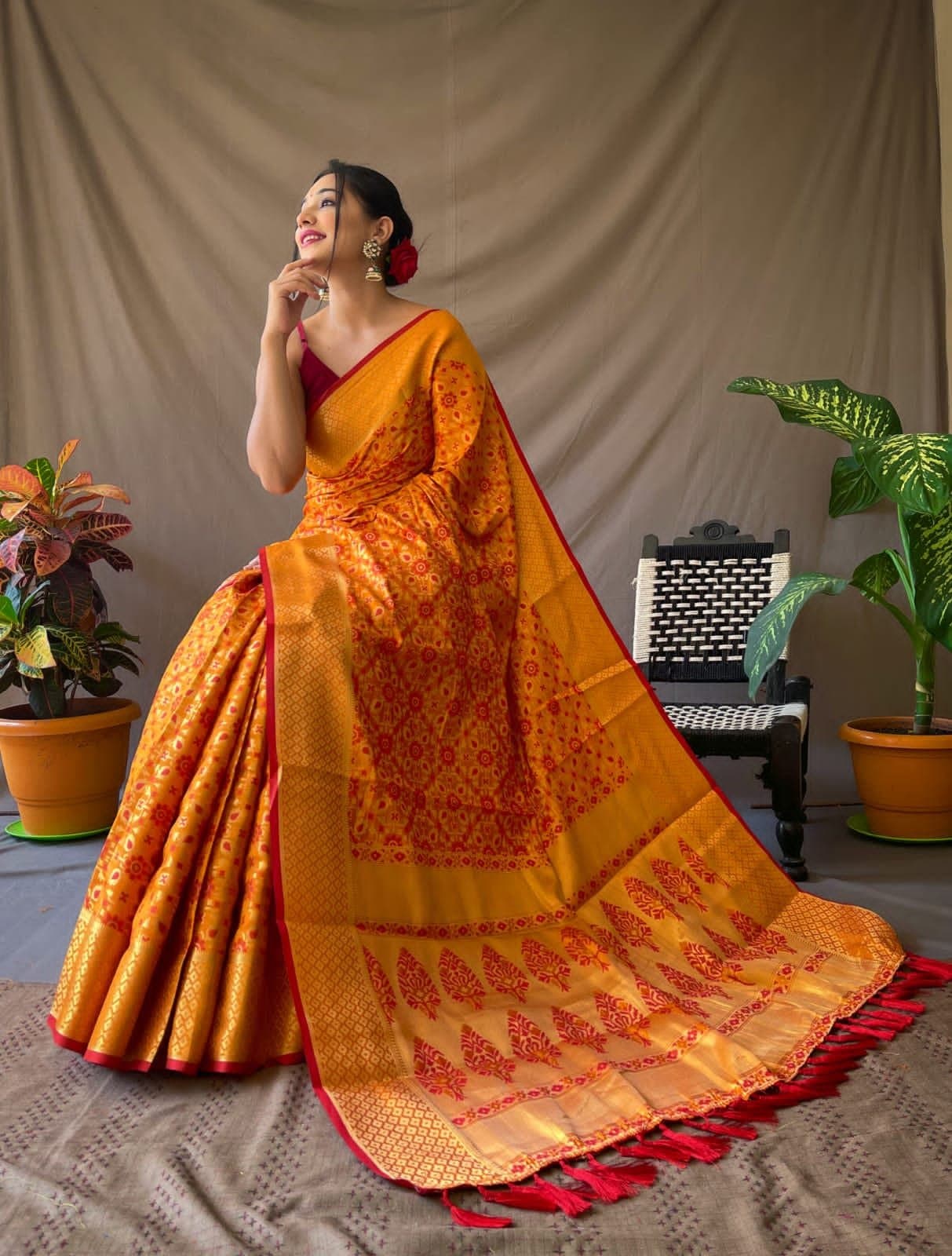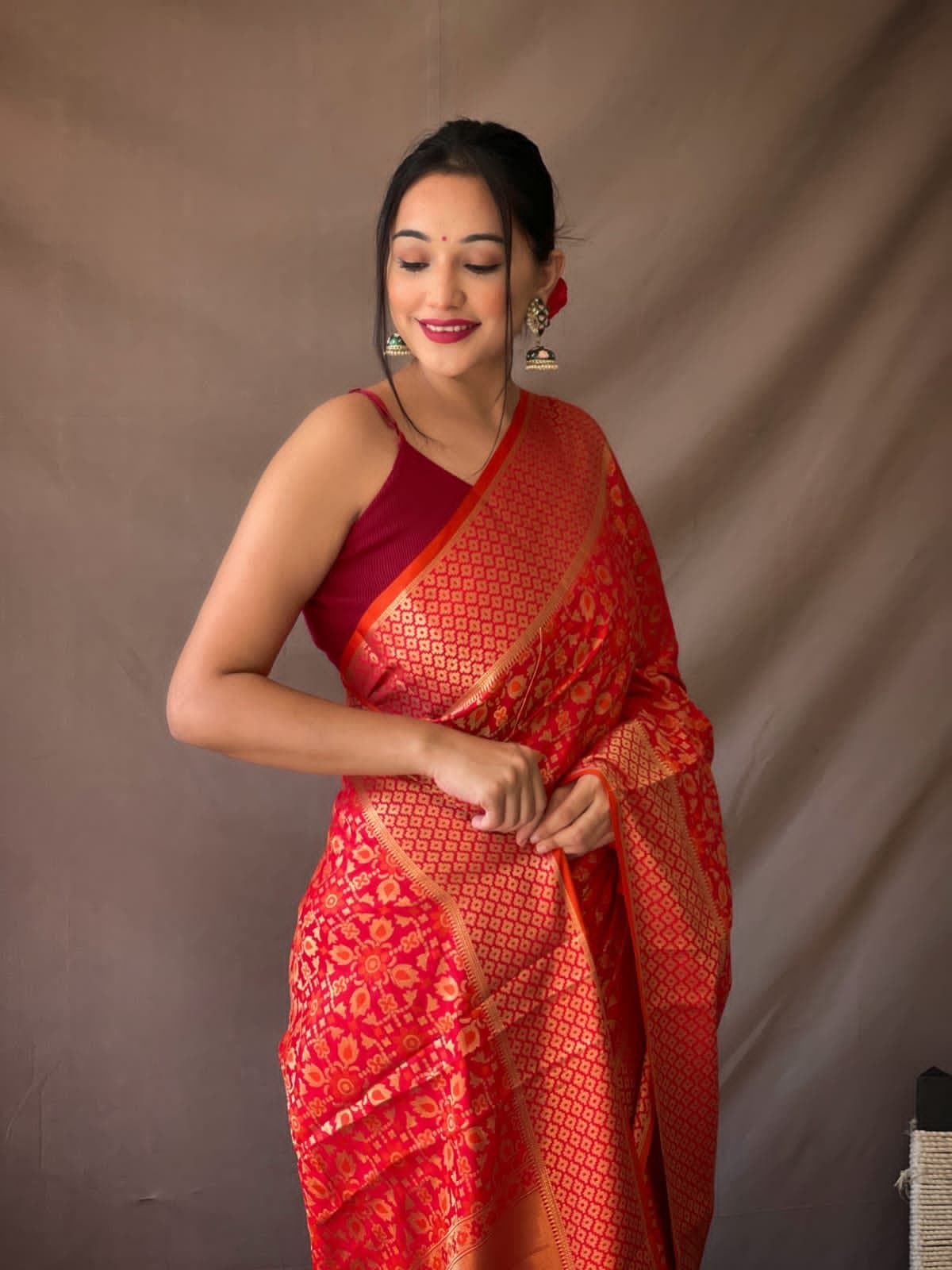
Heritage
What a Paithani Pallu Is Really For
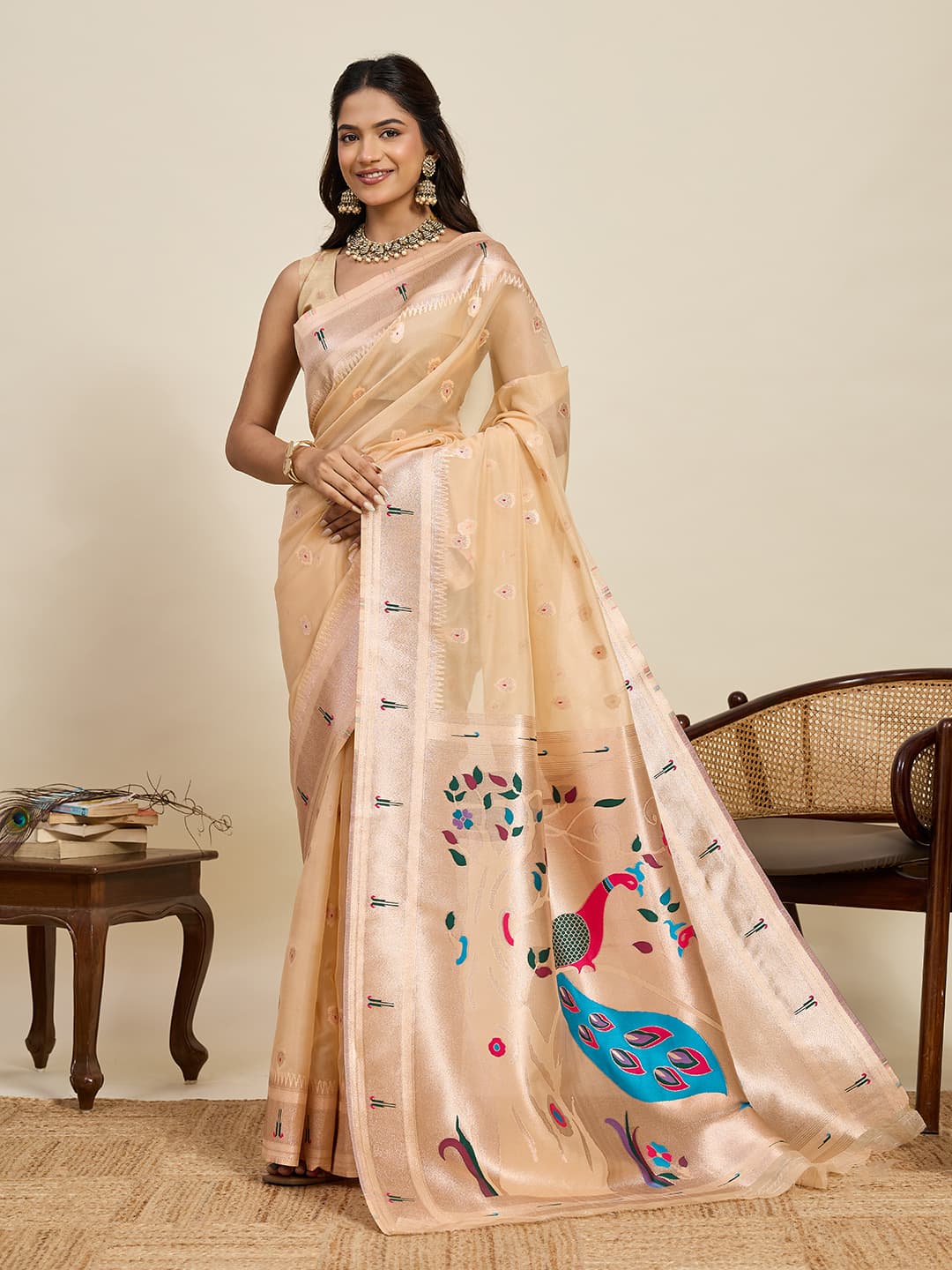
On a Paithani the story sits in the pallu, not the body. A short note on the peacock, the meenakari, and how to drape it so the motif is seen once and remembered.
Share this story
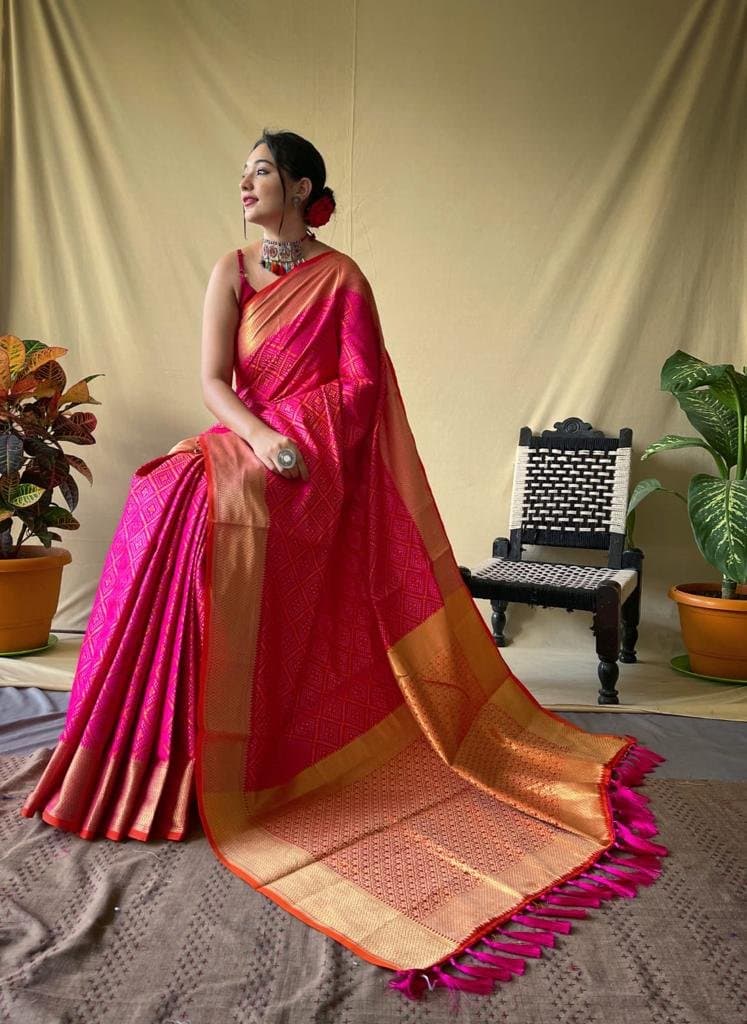
A Paithani is easy to over-explain and easy to hide. The body can be quiet. The pallu is the sentence. On the Rajvi silk in the studio the ground is a soft peach, and the peacock is worked in meenakari at the end, where a guest actually looks.
Let the motif arrive once
Do not fold the pallu into thirds so the bird is sliced. Bring it over the shoulder in one length, with the peacock sitting on the upper arm or just below it. If the motif lands at the wrist, it disappears into bangles. If it lands across the face, it competes with you.
The border on the body should stay visible at the hem. That is the frame. The pallu is the picture. When both are shouting, neither is seen.
Colour that keeps the bird clear
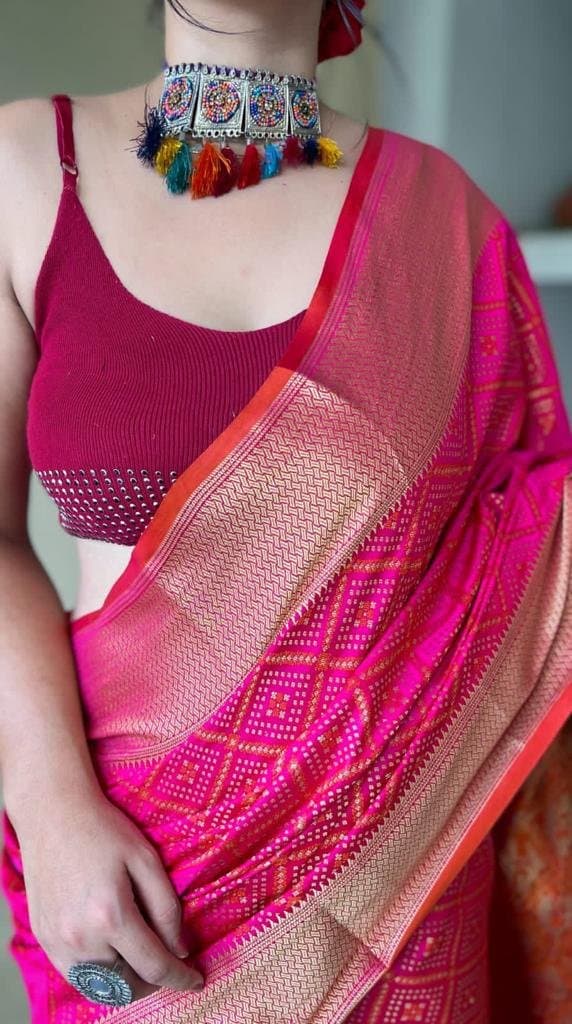
Peach, ivory, and a pale rose give the meenakari room. A heavy matching blouse in the same peach can swallow the pallu, so we often cut the blouse a tone deeper, or in a plain ivory, and keep the neckline simple. The weave is already ornate.
Look closely at the Rajvi Paithani before a wedding week. Ask to see the pallu opened fully, not folded in the box. If the peacock is complete and the silk does not feel coated, it will read across a room without a caption.
Pass it on
Share with someone who loves a drape
From the edit