Bridal
Banarasi for the Wedding Reception
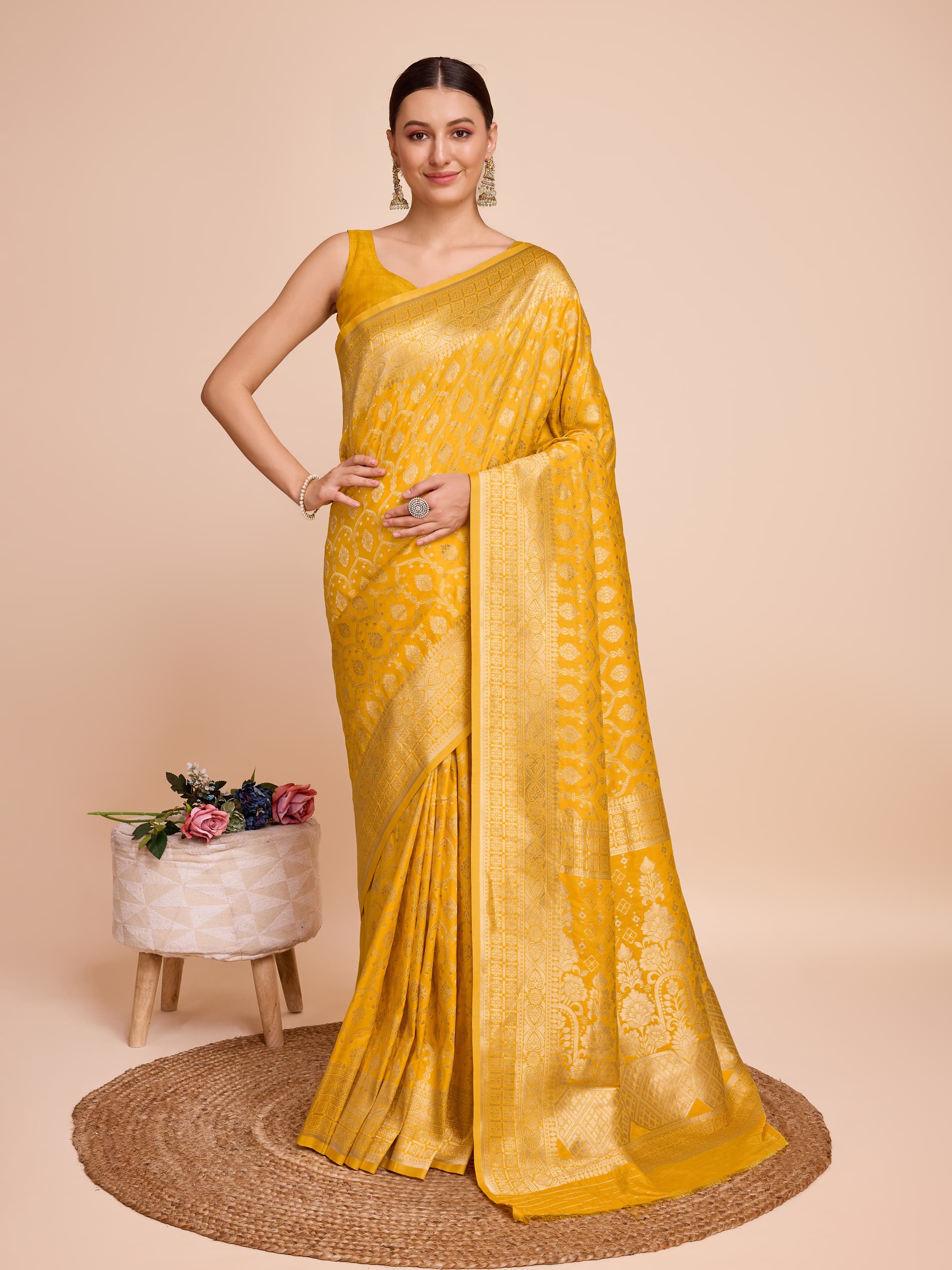
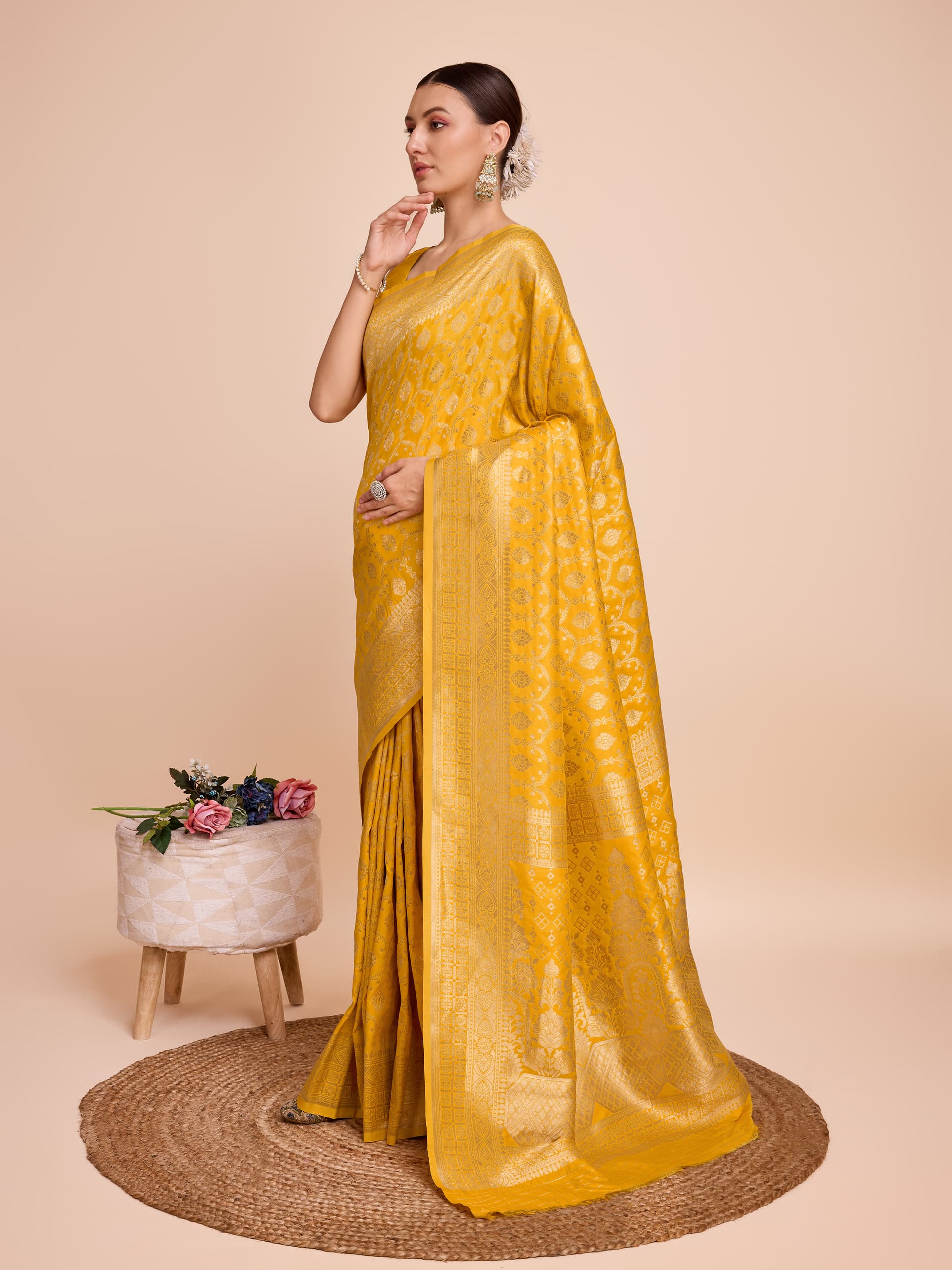
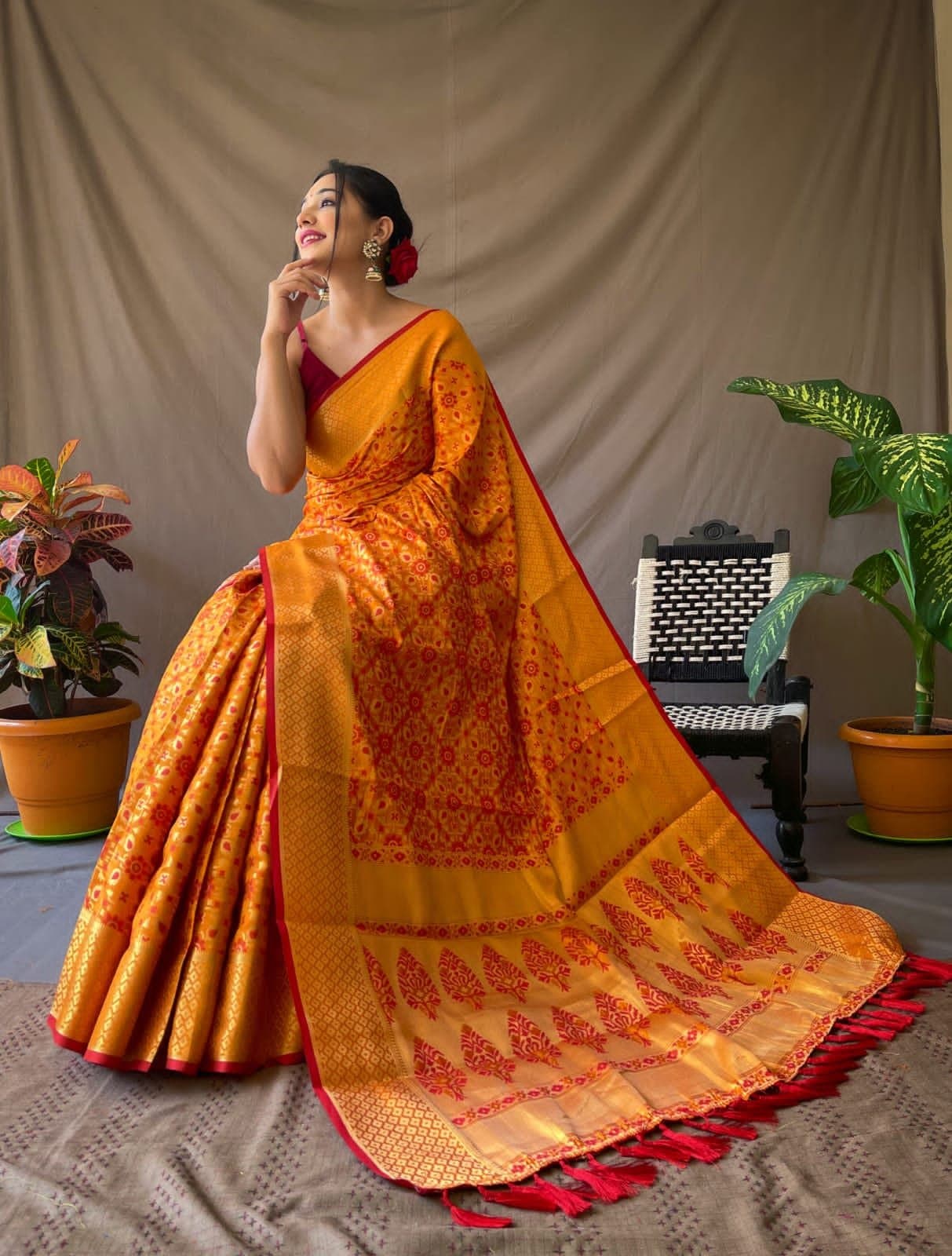
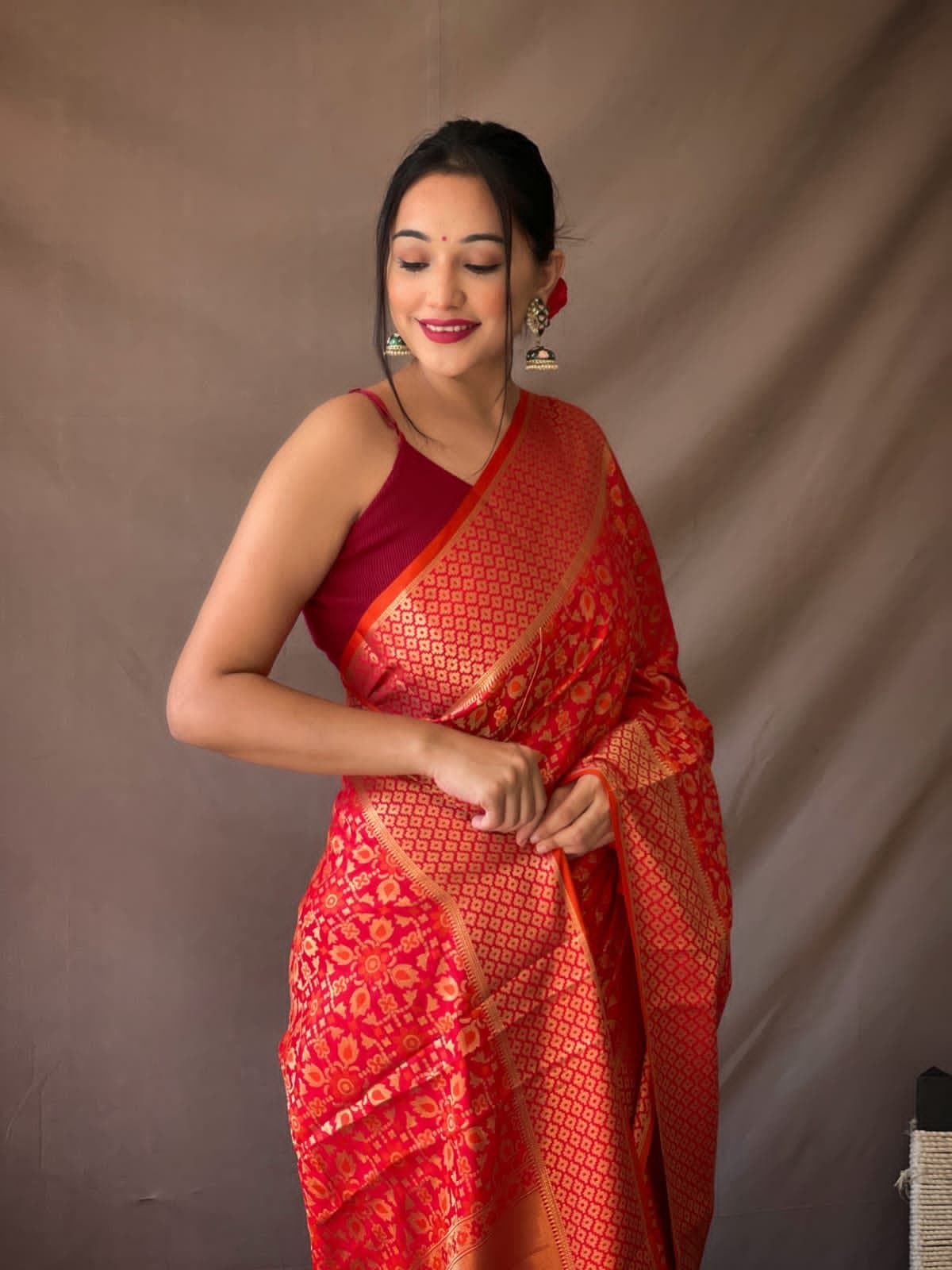
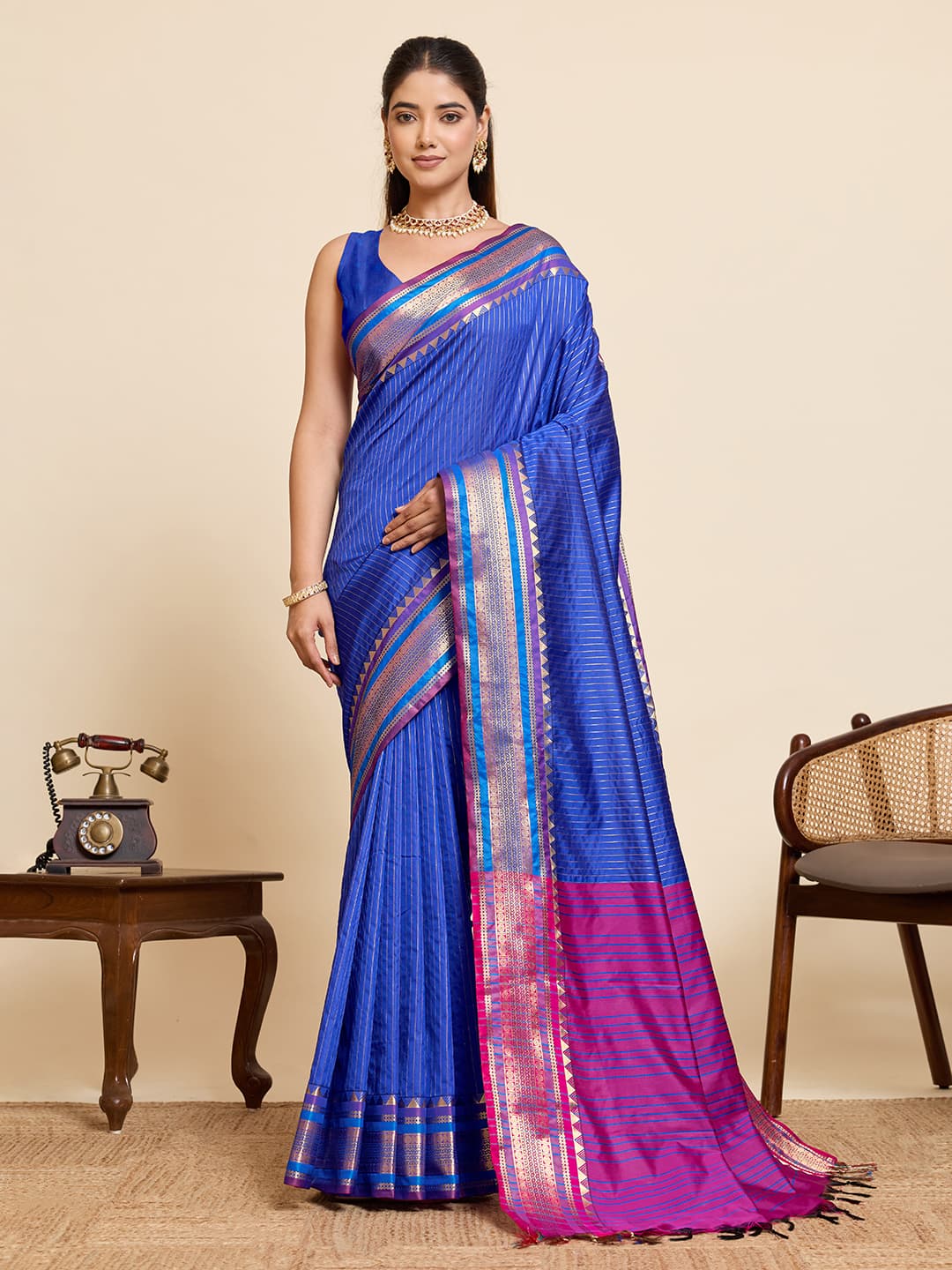
The reception is a different hour from the ceremony. A royal blue Banarasi with all-over zari is the 2026 answer when the bride, or the woman beside her, needs silk that reads across a ballroom.
Share this story
The ceremony saree is seen in daylight and in ritual. The reception saree is seen across a room, under warmer light, often after the bridal red has already had its hour. A Banarasi in royal blue does that second entrance cleanly. The zari carries the occasion. The colour does not repeat the morning.
Blue that still looks bridal
Midnight navy is elegant and can disappear into a dark hall. Royal blue, with all-over zari, stays visible when someone is looking for you from the door. Wine and bottle green from the same Divya weave are the right shift if blue is already taken by a sister. Do not put the bride and her mother in the same ground.
The blouse can be a deeper navy or a soft gold tissue, cut simply. Heavy work on both body and blouse turns the reception portrait into texture with no face.
Pack it differently from the ceremony drape
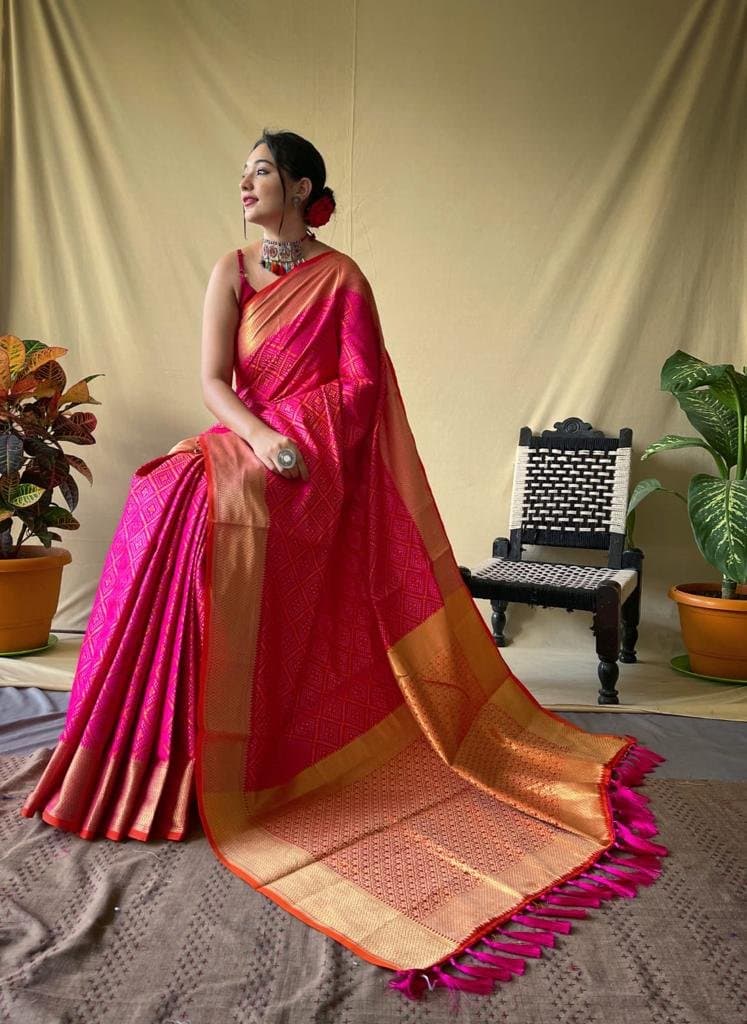
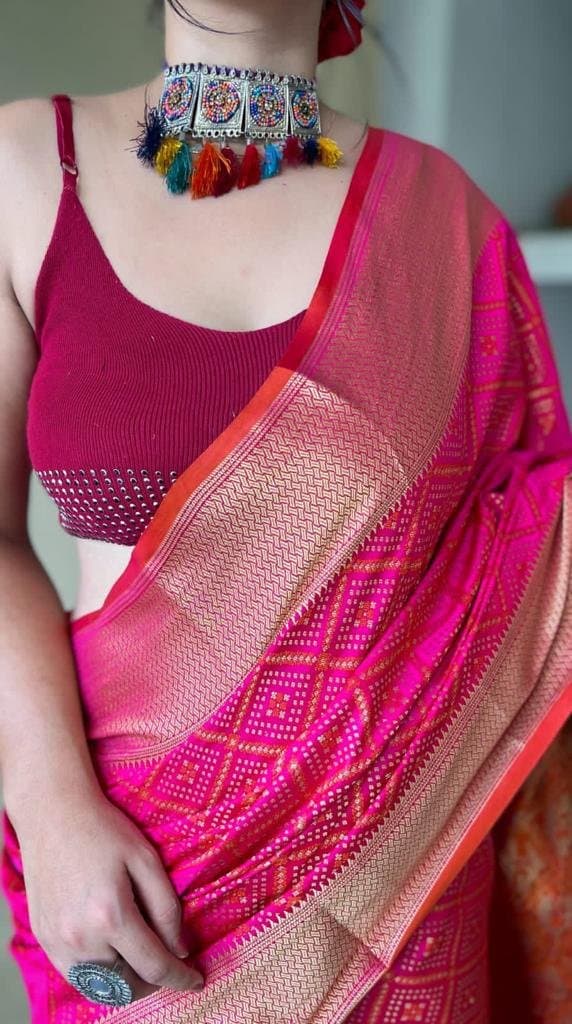
Hang the Banarasi. Do not fold the zari into a tight square overnight. Steam the pallu so the motifs lie open across the front, and keep the jewellery to one pair of earrings and a short necklace. The weave is the ornament.
The Divya Banarasi is the piece we open when the invitation says reception and the rest of the wedding week is already planned. If the blue is even and the zari does not feel glued on, it will read from the far side of the room.
Pass it on
Share with someone who loves a drape
From the edit